This blog is from the National Institute of General Medical Sciences, one of the National Institutes of Health in the U.S. Department of Health and Human Services. By supporting basic biomedical research and training nationwide, NIGMS lays the foundation for advances in disease diagnosis, treatment, and prevention.

Biomedical Beat highlights NIGMS-funded research and scientists, as well as images and tools that help illustrate biomedical concepts and advances to the general public. Our Educator's Corner is a free resource is designed for educators to build on the existing NIH STEM content, like topics from our Pathways magazines and other basic science areas, through the integration of supplemental material in Biomedical Beat blog posts.

We encourage you to share the articles.
Gone Fishing: Teaching Bioinformatics With Skate DNA

April 28, 2021

As computers have advanced over the past few decades, researchers have been able to work with larger and more complex datasets than ever before. The science of using computers to investigate biological data is called bioinformatics, and it’s helping scientists make important discoveries, such as finding versions of genes that affect a person’s risk for developing various types of cancer. Many scientists believe that almost all biologists will use bioinformatics to some degree in the future.

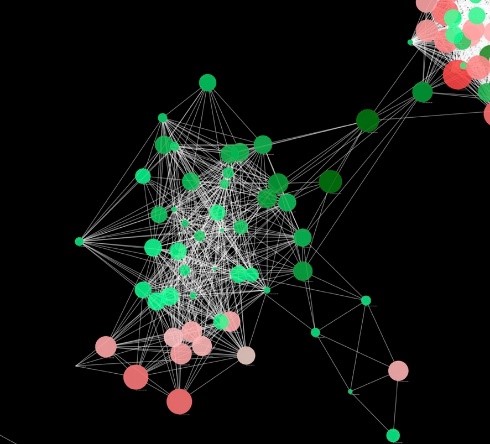
A cluster of various-sized dots connected by glowing lines.
Bioinformatics software was used to create this representation of a biological network. Credit: Benjamin King, University of Maine.

However, bioinformatics isn’t always included in college biology programs, and many of today’s researchers received their training before bioinformatics was widely taught. To address these gaps, the bioinformatics cores of the five Northeast IDeA Networks of Biomedical Research Excellence (INBREs)—located in Maine, Rhode Island, Delaware, Vermont, and New Hampshire—have worked together to offer basic bioinformatics training to students and researchers. The collaboration started in 2009 with a project where researchers sequenced the genome of a fish called the little skate (Leucoraja erinacea) and used the data to develop trainings.

Continue Reading

Making a MARC at Vanderbilt

April 14, 2021

“What we’re trying to do is support the students’ attachment to being a scientist, to becoming part of the community,” says Douglas McMahon, Ph.D., the Stevenson Professor of Biological Sciences at Vanderbilt University in Nashville, Tennessee, and a co-director of Vanderbilt’s Maximizing Access to Research Careers (MARC) program. MARC focuses on undergraduates from diverse backgrounds who are in the biomedical sciences and plan to pursue a Ph.D. or M.D./Ph.D. degree after graduation.

Sim Plotkin in front of a brick building.
Sim Plotkin.
Credit: Allyson Arserio.

For years, NIGMS has funded MARC programs throughout the United States and its territories; Vanderbilt joined their ranks in 2020. In June of that year, Dr. McMahon and Katherine Friedman, Ph.D., an associate professor of biological sciences at Vanderbilt and co-director of its MARC program, welcomed the initial cohort of six rising juniors. “MARC is a great opportunity because it focuses on helping people reach their Ph.D. goals who don’t really have others around them who know how to get there,” says Sim Plotkin, a molecular and cellular biology major. “For me, that’s really helpful because I’ll be the first in my family to graduate from college.”

Continue Reading

Accelerating the Development of Tests for Endometriosis and Cancer

April 7, 2021

NIGMS' Small Business Technology Transfer (STTR) program works toward more effective methods for patient screening, diagnosis, and treatment.

Translating lab discoveries into health care products requires large investments of time and resources. Through STTR funding, NIGMS supports researchers interested in transitioning their discoveries and/or inventions into products. Here are the stories of three researchers working with the XLerator Hub, one of the funded programs that supports six southeastern IDeA states and Puerto Rico.

Ending Diagnostic Delays for Endometriosis

A headshot of Dr. Idhaliz Flores-Caldera. Dr. Idhaliz Flores-Caldera.
Credit: Courtesy of Dr. Flores-Caldera.

Idhaliz Flores-Caldera, Ph.D., a professor of basic sciences and OB-GYN at Ponce Health Sciences University in Puerto Rico, has studied endometriosis for nearly 20 years. Endometriosis occurs when endometrial tissue, which typically lines the uterus, grows elsewhere in the body. Dr. Flores-Caldera first had the idea for a noninvasive diagnostic test for the disorder about 10 years ago. But it was only when she learned about funding opportunities from the XLerator Hub that she saw a path to validating her preliminary research findings and eventually commercializing her test.

Dr. Flores-Caldera applied for and was accepted into the hub’s proof-of-concept program, Ideas to Products, which funds researchers to flesh out ideas they want to commercialize. “I am very appreciative of how the program has provided me with tools and knowledge about commercializing a product and the process of patenting a product,” she says. “In general, scientists aren’t educated on this important topic.”

Continue Reading