This blog is from the National Institute of General Medical Sciences, one of the National Institutes of Health in the U.S. Department of Health and Human Services. By supporting basic biomedical research and training nationwide, NIGMS lays the foundation for advances in disease diagnosis, treatment, and prevention.

Biomedical Beat highlights NIGMS-funded research and scientists, as well as images and tools that help illustrate biomedical concepts and advances to the general public. Our Educator's Corner is a free resource is designed for educators to build on the existing NIH STEM content, like topics from our Pathways magazines and other basic science areas, through the integration of supplemental material in Biomedical Beat blog posts.

We encourage you to share the articles.
Preparing Students in Puerto Rico for Biomedical Careers

December 9, 2020

“There’s knowledge to seize in Puerto Rico, and our program is letting students know that they have a really important role to play in solving local problems, that they are part of the solution,” says Isar P. Godreau, Ph.D., a researcher at the University of Puerto Rico (UPR) Cayey Institute of Interdisciplinary Research.

Dr. Godreau, along with fellow researchers Mariluz Franco-Ortiz, Ph.D., at UPR Cayey Institute of Interdisciplinary Research, and Raymond Louis Tremblay, Ph.D., at UPR Humacao, directs an NIGMS Innovative Programs to Enhance Research Training (IPERT) grant. The UPR IPERT supports undergraduates throughout the university’s 11 campuses.

Resources Reach Thousands

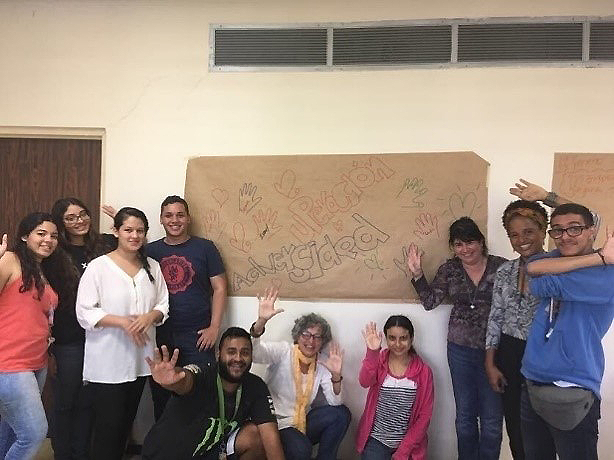
Dr. Ortiz standing with other standing and kneeling students in a classroom, smiling and waving. Dr. Franco-Ortiz (second from right) with students during a Coaching for Resiliency workshop session. Credit: Ivonne Bayron-Huertas, Ph.D.

Furthering NIGMS’ goals to create a highly skilled and diverse biomedical workforce, UPR IPERT provides undergraduate students from economically disadvantaged families with skills development and mentoring opportunities. One of the program’s main components is a series of Coaching for Resiliency workshops, which cover topics such as dealing with stress, managing family expectations, and handling financial challenges. A coach leads each group that includes about 10 to 15 first-year students and half as many second-year or higher students who act as peer mentors.

The coaching sessions help students connect with one another and with mentors. “One of the main accomplishments beyond the numbers is the power of networking,” says Dr. Franco-Ortiz. “The power of networking at different levels—from student mentors and faculty mentors at the UPR campus as well as abroad—is so crucial in terms of helping students who are looking for next steps."

Continue Reading