This blog is from the National Institute of General Medical Sciences, one of the National Institutes of Health in the U.S. Department of Health and Human Services. By supporting basic biomedical research and training nationwide, NIGMS lays the foundation for advances in disease diagnosis, treatment, and prevention.

Biomedical Beat highlights NIGMS-funded research and scientists, as well as images and tools that help illustrate biomedical concepts and advances to the general public. Our Educator's Corner is a free resource is designed for educators to build on the existing NIH STEM content, like topics from our Pathways magazines and other basic science areas, through the integration of supplemental material in Biomedical Beat blog posts.

We encourage you to share the articles.
In Other Words: Translation Isn’t Only for Languages

August 4, 2021

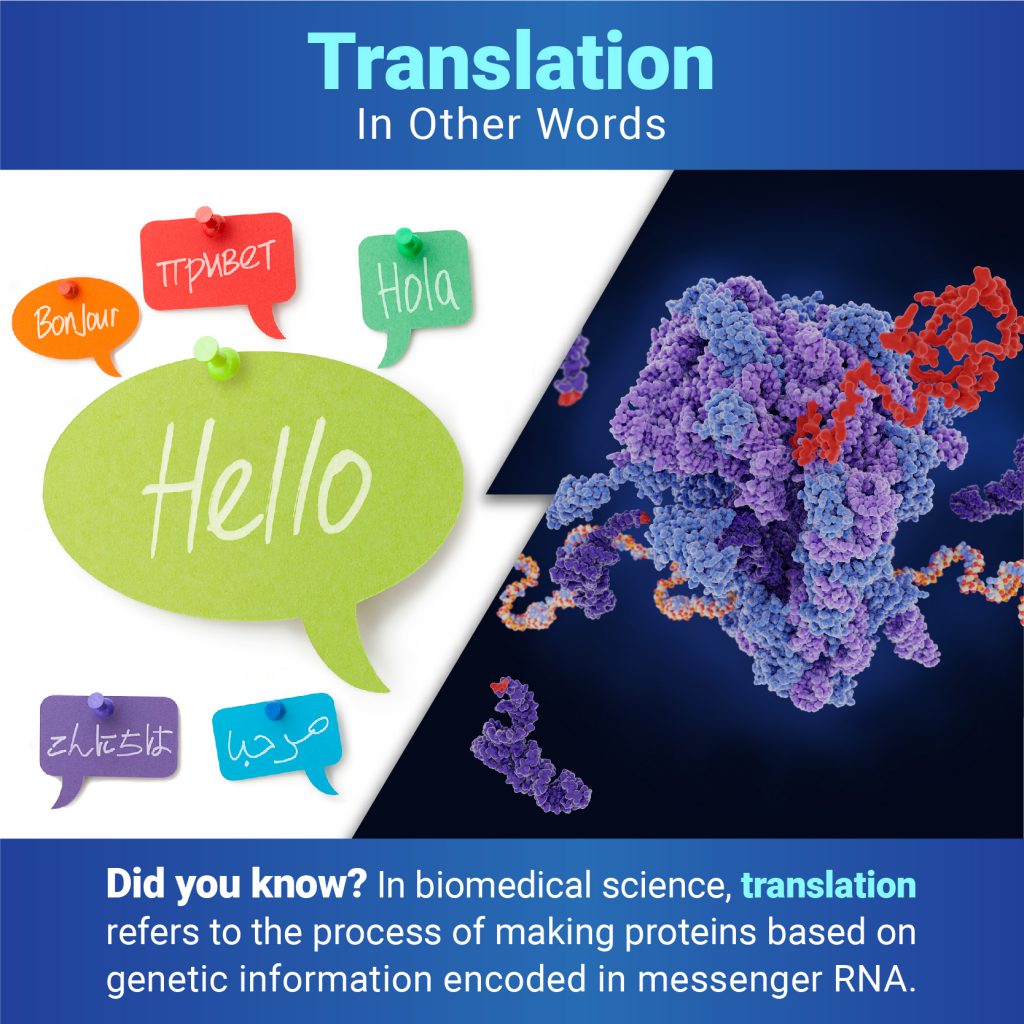
In everyday use, most people understand translation to mean converting words from one language to another. But when biologists talk about translation, they mean the process of making proteins based on the genetic information encoded in messenger RNA (mRNA). Proteins are essential for virtually every process in our bodies, from transporting oxygen to defending against infection, so translation is vital for keeping us alive and healthy.

Below the title “Translation: In Other Words,” two images are separated by a jagged line. On the left, is a large speech bubble with the word “hello” surrounded by smaller speech bubbles with greetings in other languages, and on the right is a ribosome producing a protein. Under the images, text reads, “Did you know? In biomedical science, translation refers to the process of making proteins based on genetic information encoded in messenger RNA.”
Credit: NIGMS.
Continue Reading

Science Snippet: Apoptosis Explained

July 28, 2021

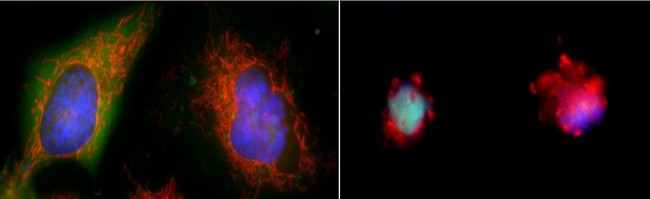
Apoptosis is the process by which cells in the body die in a controlled and predictable way because they have DNA damage or are no longer needed. The term comes from a Greek word meaning “falling off,” as in leaves falling from a tree.

When a cell undergoes apoptosis, it shrinks and pulls away from its neighbors. As the cytoskeleton that gives it shape and structure collapses, the envelope around the cell’s nucleus breaks down, and its DNA breaks into pieces. Its surface changes, signaling its death to other cells and leading a healthy cell to engulf the dying one and recycle its components.

On the left, two large cells with clear, smooth edges. On the right, two smaller cells with ragged edges.
Two cells in a healthy state (left) and entering apoptosis (right). Credit: Hogan Tang of the Denise Montell Lab, Johns Hopkins School of Medicine.
Continue Reading