This blog is from the National Institute of General Medical Sciences, one of the National Institutes of Health in the U.S. Department of Health and Human Services. By supporting basic biomedical research and training nationwide, NIGMS lays the foundation for advances in disease diagnosis, treatment, and prevention.

Biomedical Beat highlights NIGMS-funded research and scientists, as well as images and tools that help illustrate biomedical concepts and advances to the general public. Our Educator's Corner is a free resource is designed for educators to build on the existing NIH STEM content, like topics from our Pathways magazines and other basic science areas, through the integration of supplemental material in Biomedical Beat blog posts.

We encourage you to share the articles.
Quiz: Are You a Genetics Genius?

May 19, 2021

Genes are segments of DNA. They contain instructions for building one or more molecules that help the body work. Researchers in the field of genetics study genes and heredity—how certain traits are passed from parents to their offspring through DNA. NIGMS supports many scientists who investigate the genetics of people and research organisms to better understand human health and disease.

Take our quiz below to test how much you know about genetics. For more quizzes and other fun learning tools, visit our activities and multimedia webpage.

Continue Reading

Science Snippet: Learn About the Cytoskeleton

May 12, 2021

The cytoskeleton is a collection of fibers that gives shape and support to cells, like the skeleton does for our bodies. It also allows movement within the cell and, in some cases, by the entire cell. Three different types of fibers make up the cytoskeleton: actin filaments, intermediate filaments, and microtubules.

Powering Muscles

Actin filaments contract or lengthen to give cells the flexibility to move and change shape. Along with the protein myosin, they’re responsible for muscle contraction, including voluntary movement and involuntary muscle contractions, such as our heartbeats. Actin filaments are the thinnest and most brittle of the cytoskeletal fibers, but they’re also the most versatile in terms of shape.

Continue Reading

Pumping Iron: The Heavy Lifting Iron Does in Our Bodies

May 5, 2021

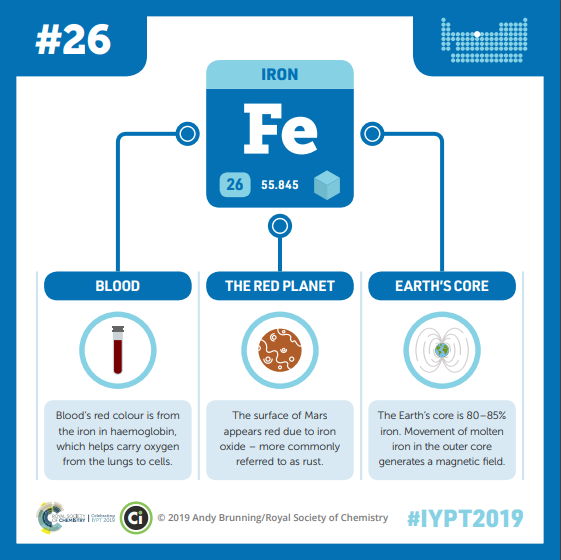
Our blood appears red for the same reason the planet Mars does: iron. The element may bring to mind cast-iron pans, wrought-iron fences, or ancient iron tools, but it’s also essential to life on Earth. All living organisms, from humans to bacteria, need iron. It’s crucial for many processes in the human body, including oxygen transport, muscle function, proper growth, cell health, and the production of several hormones.

A graphic showing iron’s abbreviation, atomic number, and atomic weight connected by lines to illustrations of a vial of blood, Mars, and Earth. Iron is the reason both our blood and the planet Mars appear red. The element also makes up the majority of Earth’s core and generates the planet’s magnetic field. Credit: Compound Interest. CC BY-NC-ND 4.0.
Continue Reading

Gone Fishing: Teaching Bioinformatics With Skate DNA

April 28, 2021

As computers have advanced over the past few decades, researchers have been able to work with larger and more complex datasets than ever before. The science of using computers to investigate biological data is called bioinformatics, and it’s helping scientists make important discoveries, such as finding versions of genes that affect a person’s risk for developing various types of cancer. Many scientists believe that almost all biologists will use bioinformatics to some degree in the future.

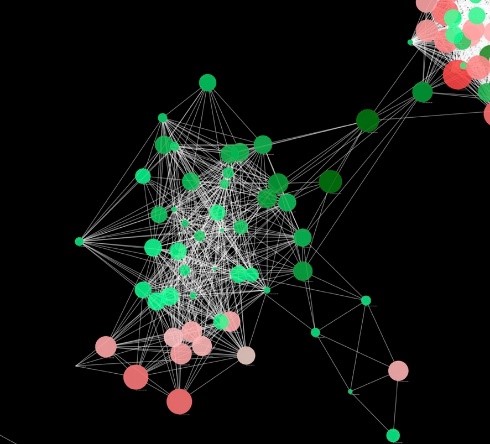
A cluster of various-sized dots connected by glowing lines.
Bioinformatics software was used to create this representation of a biological network. Credit: Benjamin King, University of Maine.

However, bioinformatics isn’t always included in college biology programs, and many of today’s researchers received their training before bioinformatics was widely taught. To address these gaps, the bioinformatics cores of the five Northeast IDeA Networks of Biomedical Research Excellence (INBREs)—located in Maine, Rhode Island, Delaware, Vermont, and New Hampshire—have worked together to offer basic bioinformatics training to students and researchers. The collaboration started in 2009 with a project where researchers sequenced the genome of a fish called the little skate (Leucoraja erinacea) and used the data to develop trainings.

Continue Reading