Christa Reynolds

Email
no44_email@nih.gov
First Name
Christa
Image
Last Name
Reynolds
machine_name
christa-reynolds

Archived: Virtual Resources from the National Research Mentoring Network

January 12, 2021

As institutions continue to work with virtual learning modalities and in honor of National Mentoring Month, we’d like to share some useful resources from the National Research Mentoring Network (NRMN). Supported by the NIH Common Fund and managed by NIGMS, the network offers free online mentoring tools and learning resources for individuals ranging from undergraduate students to faculty.

After signing up for an NRMN account through an easy, online process, you can access the network’s mentoring tools and resources, including MyNRMN. The MyNRMN platform allows you to browse and connect with other scientists, and it can match you with a mentor or mentee with similar research interests. Through video chats, instant messaging, and file sharing between mentors and mentees, you can design a mentorship program that fits your needs.  

Continue Reading

Archived: How I Spent My Summer Vacation

October 23, 2017

One of NIGMS’ primary goals is to provide support to train the next generation of biomedical research scientists. In pursuit of this goal, NIGMS aims to enhance the diversity of the scientific workforce and develop research capacities throughout the country. NIGMS-administered training programs at the undergraduate level provide support for trainees underrepresented in the biomedical sciences to develop skills to successfully transition into doctoral programs. Three unique NIGMS-administered undergraduate-focused programs are highlighted below.

  • Building Infrastructure Leading to Diversity (BUILD) grant awards help undergraduate institutions implement and study ways to engage and retain students from diverse backgrounds in biomedical research. The program aims to help these students on the pathway to becoming scientists. Primary institutions eligible for BUILD awards have fewer than $7.5 million in total NIH research project grant funding and a student population with at least 25 percent Pell Grant recipients. BUILD is part of the Common Fund Diversity Program Consortium, a national collaborative dedicated to enhancing diversity in the biomedical research workforce.
  • Maximizing Access to Research Careers Undergraduate Student Training in Academic Research (MARC U-STAR) awards provide support for undergraduate trainees from underrepresented backgrounds to gain skills and improve their preparation for high-caliber graduate training at the doctoral level. Awards are made to colleges and universities that offer the baccalaureate degree.
  • The Research Initiative for Scientific Enhancement (RISE) program aims to help reduce the existing gap between underrepresented and well-represented students in completing doctoral degrees. RISE supports institutions that award the baccalaureate, master's, or doctoral degree in biomedical science fields; programs include well-integrated developmental activities designed to strengthen students’ academic preparation, research training, and professional skills.

Although BUILD, MARC, and RISE offer a variety of activities at more than 100 supported institutions during the school year—including laboratory research opportunities, faculty mentoring, seminars, and workshops—the programs also provide training experiences throughout the summer. The slideshow below gives a quick peek into what several students participating in MARC, RISE, and BUILD activities did over the summer.

Click on an image below to launch slideshow.

Continue Reading

Archived: Having a BLaST in Alaska … and Beyond

September 14, 2017
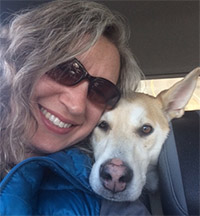
Lori Gildehaus and her lovable, mischievous dog, Charley. Credit: Lori Gildehaus.
Lori Gildehaus loves her job because she’s almost always doing something different. Some days, she leads professional development sessions for undergraduate students at the University of Alaska, Fairbanks (UAF). Other days, she’s weathered down in isolated communities along Alaska’s coast while leading community science and outreach events. These activities are just a few of her many responsibilities. Gildehaus is a laboratory research and teaching technician for UAF’s Biomedical Learning and Student Training  (BLaST) program. UAF’s BLaST program is one of 10 sites across the country in the Building Infrastructure Leading to Diversity (BUILD) initiative. As a component of the NIH Diversity Program Consortium, BUILD aims to find the best ways to engage and retain students from diverse backgrounds in biomedical research. Each BUILD site is as unique as the community it serves. UAF’s BLaST program embraces Alaska Native culture and the unique landscape that its students, faculty, and staff call home. UAF attracts students from across Alaska, making for a diverse student body. BLaST serves not only UAF but also seven other campuses throughout Alaska, ranging from IỊisaġvik College in Utqiaġvik (formerly Barrow) at the northern tip of the state, to the University of Alaska Southeast in Sitka, more than 1,000 miles away. In any area that large, it would be difficult to organize community science outreach and foster connections between institutions. But in Alaska, there aren’t even roads connecting most rural campuses to Fairbanks. Bridging gaps Gildehaus and BLaST’s four other laboratory research and teaching technicians help bridge these gaps and bring science to local communities. They also serve as intermediaries between undergraduate students doing research and their professors. For undergraduates, talking to professors can be intimidating, and navigating the university landscape can be overwhelming. One of Gildehaus’ responsibilities is providing guidance to students. “We want undergraduates to have a really good opportunity to explore their interests and have a good experience on their research projects,” Gildehaus says. Gildehaus has a broad background, including biological sciences, human anatomy and physiology, science outreach, and mentoring. This experience helps her develop BLaST’s mentoring component. BLaST uses a tiered mentoring approach to provide opportunities for undergraduate and graduate students to share experiences and participate in mentoring. Gildehaus has planned three mentoring workshops for fall 2017. One of these workshops, organized with assistance from the National Research Mentoring Network, will focus on culturally aware mentoring. Another will teach attendees how to navigate conversations, share stories, and increase awareness and understanding of Alaska Native and other cultures. Bringing science outside the lab BLaST’s diverse group of students includes many people who reside in rural areas and live a subsistence lifestyle. Traditional lab work schedules and science education can often seem disconnected from these communities. To better engage students, BLaST implements the One Health Approach, which emphasizes the interconnectedness between human, animal, and environmental health by promoting ways to expand interdisciplinary collaborations to attain optimal health for all. The program helps students recognize that there are opportunities to be involved in biomedical research in their communities, such as researching the natural vegetation of the Alaskan tundra, studying marine mammals, or finding cures for illnesses.  
Continue Reading

Archived: Notes from the 2017 Training, Workforce Development, and Diversity Program Directors’ Meeting

August 18, 2017
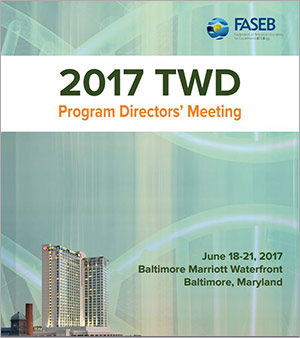
2017 TWD Program Directors' Meeting: June 18-21, 2017. Baltimore Marriott Waterfront. Baltimore, MarylandThe 2017 Training, Workforce Development, and Diversity (TWD) Program Directors’ Meeting, organized through a grant to the Federation of Associations for Experimental Biology, took place June 18-21 in Baltimore. This biennial meeting brought together the community of faculty, staff and administrators who manage TWD undergraduate and predoctoral training programs across the nation to network, share best practices for program improvement and connect with NIGMS staff. This year, participants presented more than 100 posters. Plenary sessions and keynote talks described innovative approaches for training and evaluation, efforts to enhance diversity in the biomedical workforce and more. Highlights included:
  • Alison Gammie, director of NIGMS’ TWD division, outlined the new predoctoral T32 funding opportunity announcement (FOA) in her presentation. The FOA will emphasize cultivating a diverse pool of well-trained scientists and will focus on skills and career development, the importance of scientific rigor and reproducibility, and the value of inclusive and supportive training environments. It is scheduled for publication this fall.
  • Principal investigators of administrative supplements to NIGMS predoctoral training grants presented their approaches to modernizing biomedical graduate education through increased focus on scientific rigor, career and skill development, and training opportunities.
  • Melanie Sinche, director of education at the Jackson Laboratory for Genomic Medicine and author of “Next Gen PhD: A Guide to Career Paths in Science,” shared her research on recent STEM Ph.D. graduates’ career pathways. She found that the majority of recent STEM Ph.D. graduates who responded to her survey expressed satisfaction with their work, and they chose their employment primarily for “intellectual challenge” and “flexibility.”
  • Erin Dolan, a professor at the University of Georgia, talked about effective strategies for science education. Citing a variety of references, Dolan presented on how the research training community can help students develop interests and careers in the sciences by incorporating models from educational research and social cognitive career theory. This approach is intended to nurture greater enthusiasm for science because it’s based on how students learn and make career decisions. Later, members of the Diversity Program Consortium’s Coordination and Evaluation Center led a workshop on evaluation techniques and shared some tools with attendees that may aid in more effectively evaluating training programs.
  • In his Message from the Director, Jon Lorsch included an overview of ongoing NIGMS priorities, including the expansion of the Maximizing Investigators’ Research Award (MIRA) program. He also announced that NIGMS is the new home for the Science Education Partnership Award (SEPA) program, which supports educational and career activities for pre-K to grade 12 students, as well as other public outreach programming. SEPA strongly complements the rest of NIGMS’ workforce diversity and training portfolio. Examples of SEPA projects include mobile laboratories  that bring science to rural communities, professional development for teachers and media-based projects like the PBS NewsHour Student Reporting Labs.
To view more of the presentations and to access abstracts for the poster sessions, please visit the 2017 TWD Program Directors’ Meeting resources page.
Continue Reading

Archived: Students ‘Build’ Connections and More at Scientific Conferences

May 1, 2017

For students in the biomedical sciences, attending conferences is a chance to share ideas and research experiences with colleagues from across the country, while learning about educational and career opportunities and building identities as scientists. Outcomes from student conference attendance may also help us to learn how students build and maintain scientific identities. At conferences over the past two years, we have witnessed undergraduate trainees from the more recently-established Building Infrastructure Leading to Diversity (BUILD) program joining colleagues from long-running NIGMS-supported grants, like Research Initiative for Scientific Enhancement (RISE) and Maximizing Access to Research Careers (MARC).

Since BUILD is a fairly new program, it’s been great to see how quickly its trainees have embraced the opportunities conferences have to offer, from simply meeting other program trainees and sharing stories about their research to making valuable networking connections. BUILD, established in 2014, is a component of the Diversity Program Consortium (DPC), which also includes the National Research Mentoring Network (NRMN) and the Coordination and Evaluation Center (CEC). The DPC is part of a broad, trans-NIH strategy to address new ways to promote diversity in the biomedical research workforce.

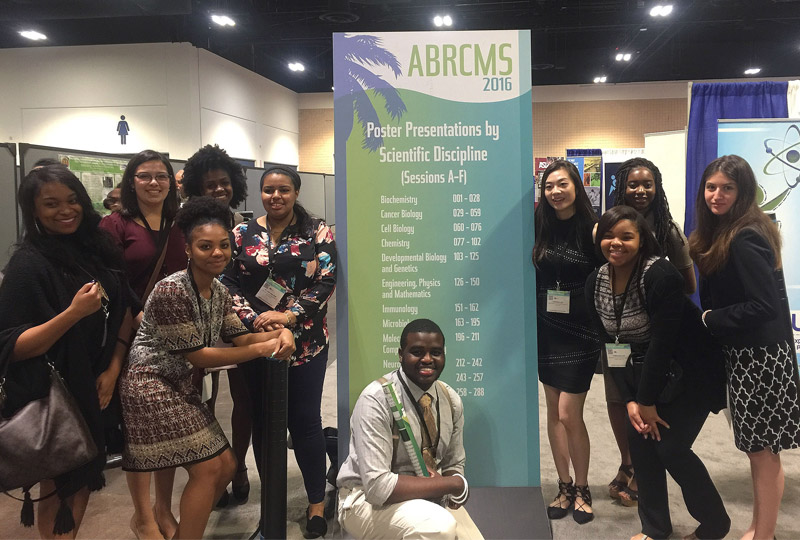
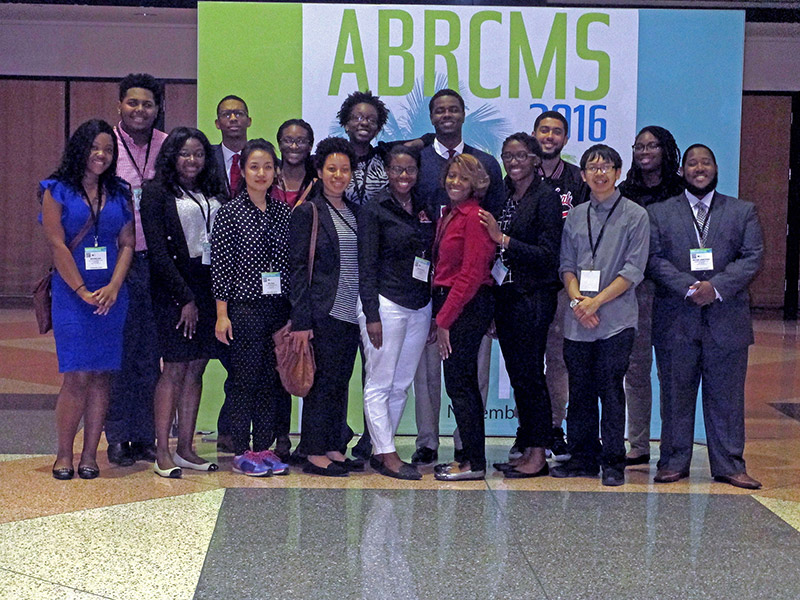
In recent years, BUILD trainees have been in high attendance at the NIGMS-supported Society for Advancement of Chicanos/Hispanics and Native Americans in Science (SACNAS) conference and the Annual Biomedical Research Conference for Minority Students (ABRCMS). These conferences focus on broadening participation in biomedical research and introduce students to groundbreaking scientists.

During the BUILD networking sessions at both meetings, we heard students’ stories about their research and programs. We also had the opportunity to witness an element of students developing scientific identities—trading business cards.

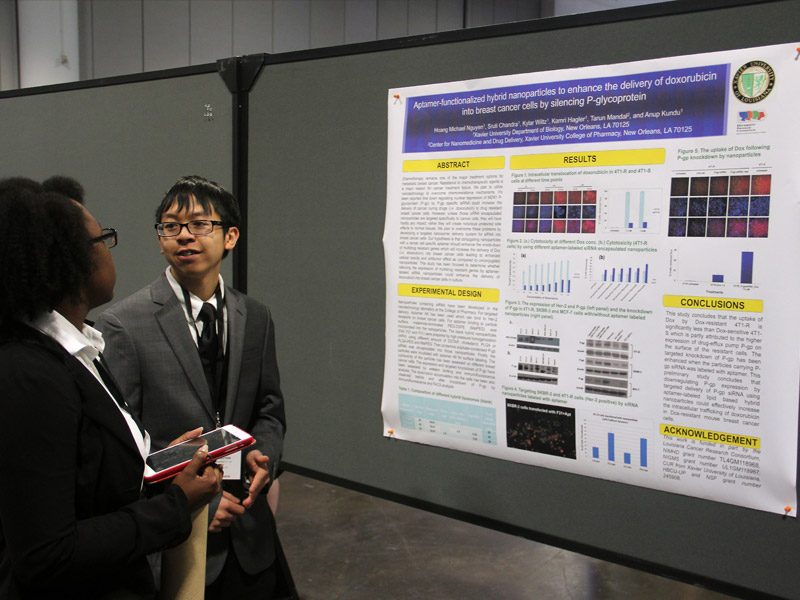
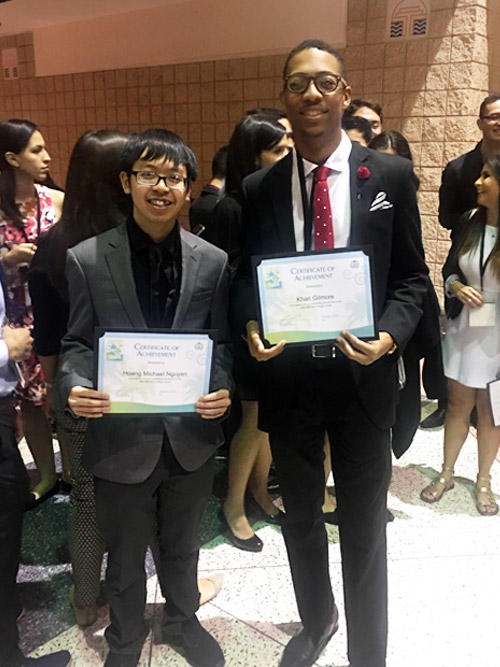
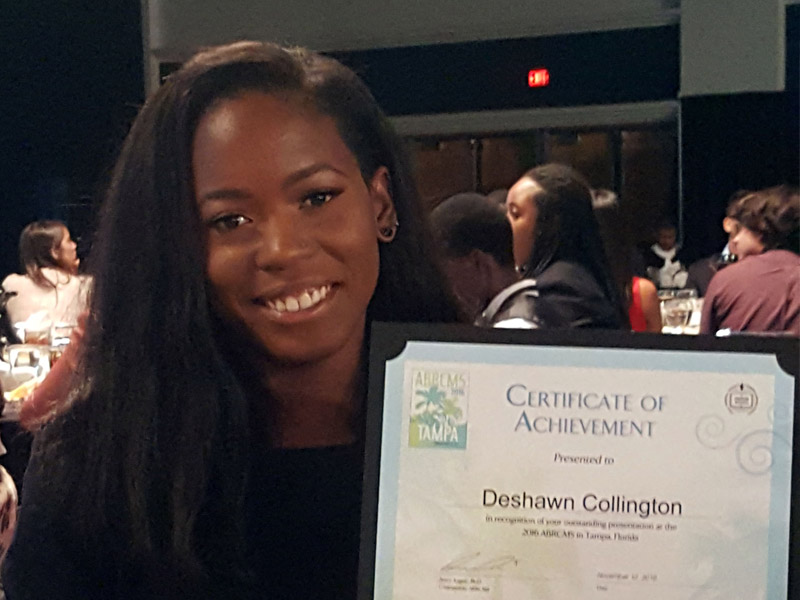
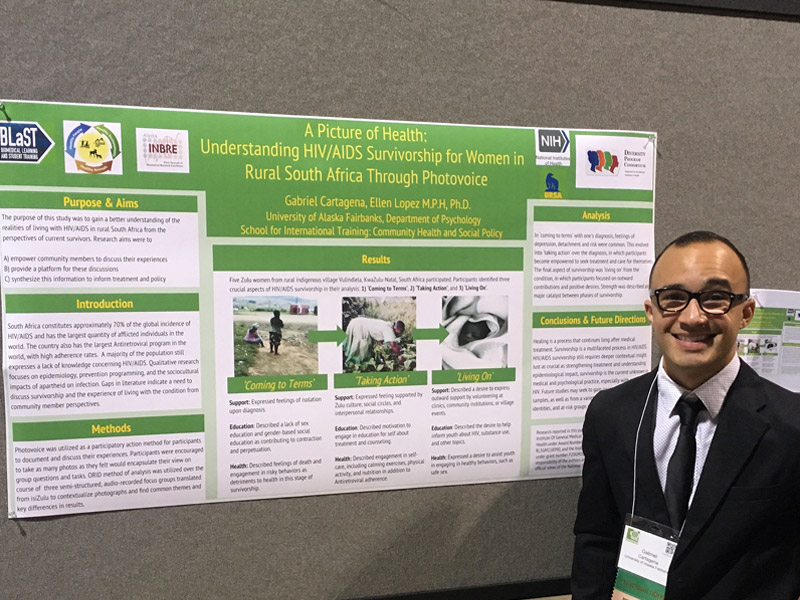
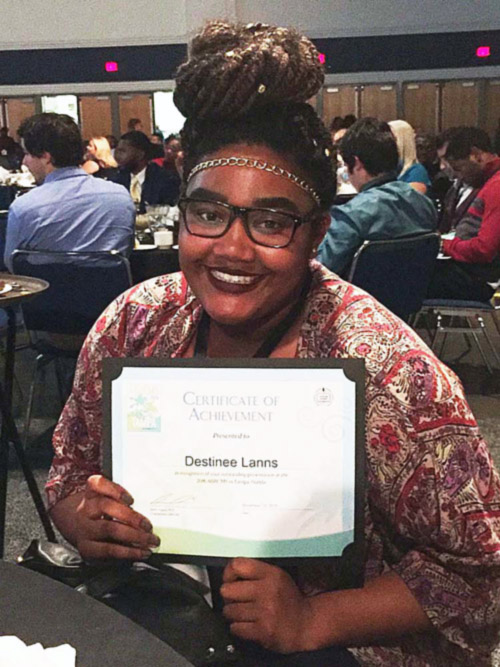
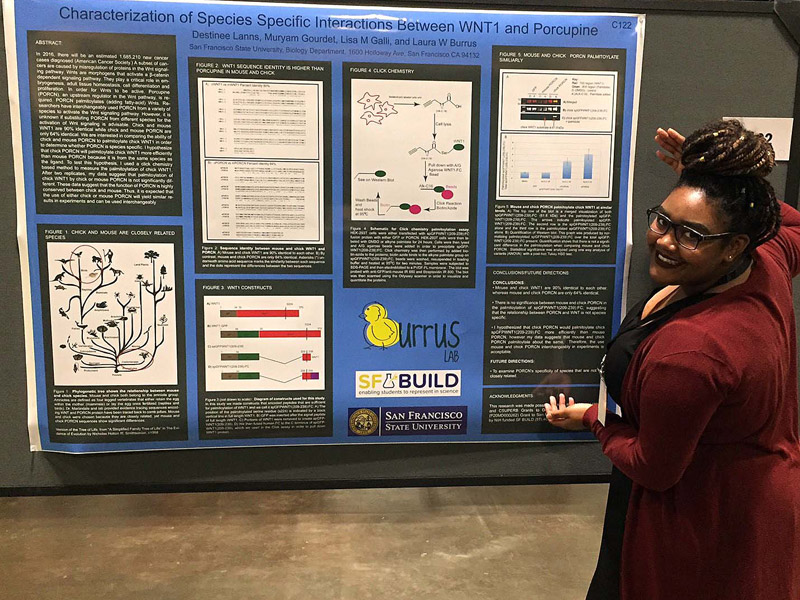
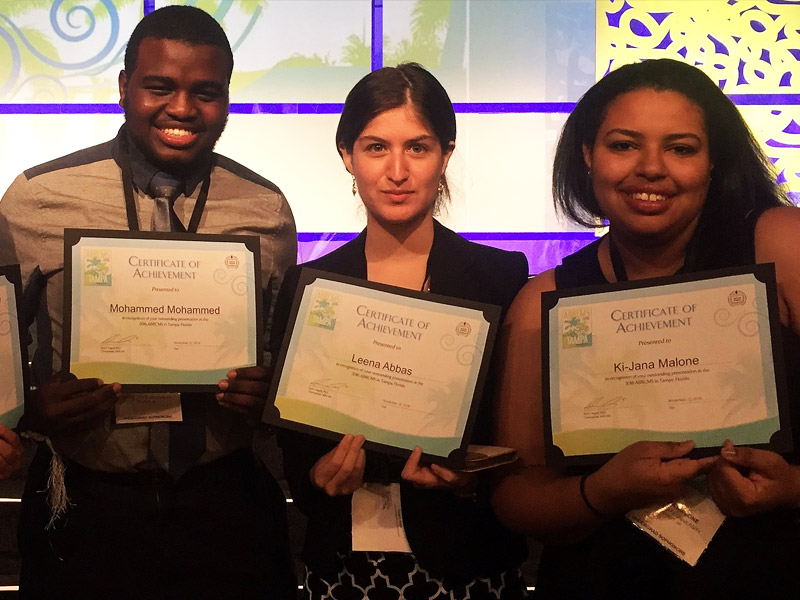
Many BUILD students also made presentations on their research at the 2016 SACNAS and ABRCMS meetings, and eight of them received awards for posters and oral presentations. These awards are based on a variety of criteria, including knowledge of a subject area as well as experimental design. Because the DPC’s BUILD programs introduce undergraduate students to research through hands-on lab experience, it’s great to see that students are sharing their research findings, taking part in poster sessions and being recognized for their efforts.

Students’ interactions during networking sessions and scientific presentations complement another DPC goal: providing role models and mentors to students from a wide variety of backgrounds. Because evaluating program outcomes is integral to the DPC, we are evaluating whether these kinds of interactions help students persist in science careers and develop identities as scientists. It is our hope that what we learn from DPC interventions—such as promoting conference attendance among students—can be scaled to fit a larger audience and benefit students in other training programs.

Prehnite
Hematite
Calcite
Calcite
Calcite
Sulphur
Gypsum with Sand
Calcite
Calcite
Continue Reading

Archived: Bit by the Research Bug: Priscilla’s Growth as a Scientist

March 28, 2017
This is the third post in a new series highlighting NIGMS’ efforts toward developing a robust, diverse and well-trained scientific workforce.
Priscilla Del Valle Credit: Christa Reynolds.
Priscilla Del Valle Academic Institution: The University of Texas at El Paso Major: Microbiology Minors: Sociology and Biomedical Engineering Mentor: Charles Spencer Favorite Book: The Immortal Life of Henrietta Lacks, by Rebecca Skloot Favorite Food: Tacos Favorite music: Pop Hobbies: Reading and drinking coffee
It’s not every day that you’ll hear someone say, “I learned more about parasites, and I thought, ‘This is so cool!’” But it’s also not every day that you’ll meet an undergraduate researcher like 21-year-old Priscilla Del Valle.
BUILD and the Diversity Program Consortium The Diversity Program Consortium (DPC) aims to enhance diversity in the biomedical research workforce through improved recruitment, training and mentoring nationwide. It comprises three integrated programs—Building Infrastructure Leading to Diversity (BUILD), which implements activities at student, faculty and institutional levels; the National Research Mentoring Network (NRMN), which provides mentoring and career development opportunities for scientists at all levels; and the Coordination and Evaluation Center (CEC), which is responsible for evaluating and coordinating DPC activities. Ten undergraduate institutions across the United States have received BUILD grants, and together, they serve a diverse population. Each BUILD site has developed a unique program intended to engage and prepare students for success in the biomedical sciences and maximize opportunities for research training and faculty development. BUILD programs include everything from curricular redesign, lab renovations, faculty training and research grants, to student career development, mentoring and research-intensive summer programs.
Del Valle’s interest in studying infectious diseases and parasites is motivating her to pursue an M.D./Ph.D. focusing on immunology and pathogenic microorganisms. Currently, Del Valle is a junior at The University of Texas at El Paso (UTEP)’s BUILDing SCHOLARS Center. BUILDing SCHOLARS, which stands for “Building Infrastructure Leading to Diversity Southwest Consortium of Health-Oriented Education Leaders and Research Scholars,” focuses on providing undergraduate students interested in the biomedical sciences with academic, financial and professional development opportunities. Del Valle is one of the first cohort of students selected to take part in this training opportunity. BUILD scholars receive individual support through this training model, and Del Valle says she likes “the way that they [BUILDing SCHOLARS] take care of us and the workshops and opportunities that we have.” Born in El Paso, Texas, Del Valle moved to Saltillo, Mexico, where she spent most of her childhood. Shortly after graduating from high school, she returned to El Paso to start undergraduate courses at El Paso Community College (EPCC), to pursue an M.D. Del Valle explains that in Mexico, unlike in the United States, careers in medical research are not really emphasized in the student community or in society, so she did not have firsthand experience with research. Del Valle discovered her passion for research when she was assigned a project on malaria as part of an EPCC course. She was fascinated by the parasite that causes malaria. “It impressed me how something so little could infect a person so harshly,” she says.
Continue Reading

Archived: Not Discounting His Future: Austin Works Toward His Goals

February 8, 2017
This is the second post in a new series highlighting NIGMS’ efforts toward developing a robust, diverse and well-trained scientific workforce.
Austin Phanouvong Credit: Christa Reynolds.
Austin Phanouvong Academic Institution: Portland State University Major: Biology Minor: Chemistry Mentor: Suzanne Mitchell Favorite Book: The Alchemist, by Paulo Coelho Favorite Food: Sushi Hobbies: Hiking, cooking and traveling
BUILD and the Diversity Program Consortium The Diversity Program Consortium (DPC) aims to enhance diversity in the biomedical research workforce through improved recruitment, training and mentoring nationwide. It comprises three integrated programs—Building Infrastructure Leading to Diversity (BUILD), which implements activities at student, faculty and institutional levels; the National Research Mentoring Network (NRMN), which provides mentoring and career development opportunities for scientists at all levels; and the Coordination and Evaluation Center (CEC), which is responsible for evaluating and coordinating DPC activities. Ten undergraduate institutions across the United States have received BUILD grants, and together, they serve a diverse population. Each BUILD site has developed a unique program intended to engage and prepare students for success in the biomedical sciences and maximize opportunities for research training and faculty development. BUILD programs include everything from curricular redesign, lab renovations, faculty training and research grants, to student career development, mentoring and research-intensive summer programs.
Austin Phanouvong, 21, likes biology because it teaches him about life. “Even the way we walk, the way we breathe – there’s all these little components to it that we don’t even think about but they’re very helpful, and one hiccup in that system can lead to many diseases and sicknesses,” Phanouvong says. Born and raised in Portland, Oregon, Phanouvong is a senior at Portland State University (PSU), where he is in the Building Infrastructure Leading to Diversity (BUILD) EXITO program. As a student in BUILD EXITO  (which stands for “Enhancing Cross-Disciplinary Infrastructure and Training at Oregon”), Phanouvong takes biomedical science courses, conducts research and participates in professional development workshops and seminars. He has learned about preparing a CV and writing personal statements. In spring 2017, Phanouvong will graduate with a major in biology and a minor in chemistry. He will continue to pursue research opportunities as he applies for medical school, and he hasn’t ruled out the possibility of pursuing a Ph.D. in the future. Since high school, Phanouvong’s desire has been to help people through a healthcare career. Originally, he was interested in nursing, but he decided he could push his career plans and education farther by going to medical school. Because of his interest in hands-on research, last year Phanouvong’s honors thesis advisor recommended he apply for the BUILD program, and Phanouvong realized BUILD EXITO would be a great opportunity to engage in research as an undergraduate student.
Continue Reading

Archived: Getting It Done: Chyann’s Path to Graduate School and Research

January 3, 2017
This is the first post in a new series highlighting NIGMS' efforts toward developing a robust, diverse and well-trained scientific workforce.
Chyann Richard Credit: Christa Reynolds.
Chyann Richard Academic Institution: California State University, Long Beach Major: Psychology Mentor: Michelle Barrack Favorite Book: Outliers, by Malcolm Gladwell Favorite sports team: Los Angeles Lakers Favorite music: R&B
“A lot of people would never guess that I’m in research and I take pride in that. I want to be able to represent people that don’t even go this far,” Chyann Richard, 20, says.
BUILD and the Diversity Program Consortium The Diversity Program Consortium (DPC) aims to enhance diversity in the biomedical research workforce through improved recruitment, training and mentoring nationwide. It comprises three integrated programs—Building Infrastructure Leading to Diversity (BUILD), which implements activities at student, faculty and institutional levels; the National Research Mentoring Network (NRMN), which provides mentoring and career development opportunities for scientists at all levels; and the Coordination and Evaluation Center (CEC), which is responsible for evaluating and coordinating DPC activities. Ten undergraduate institutions across the United States have received BUILD grants, and together, they serve a diverse population. Each BUILD site has developed a unique program intended to engage and prepare students for success in the biomedical sciences and maximize opportunities for research training and faculty development. BUILD programs include everything from curricular redesign, lab renovations, faculty training and research grants, to student career development, mentoring and research-intensive summer programs.
Currently a junior at California State University, Long Beach (CSULB), Richard is majoring in psychology. After she graduates with a bachelor’s degree in 2018, she plans to continue to a Ph.D. program and do research in behavioral neuroscience. Richard is among a select group of undergraduate college students participating in the Building Infrastructure Leading to Diversity (BUILD) program. The BUILD programs focus on finding innovative approaches to increase student engagement in the biomedical sciences, through interventions at student, faculty and institutional levels. As a BUILD scholar, Richard is conducting laboratory research and preparing for graduate school through career development seminars, presentations and other activities. Richard loves how research introduces her to new ideas and allows her to share these concepts with others, including her parents. “Because they’ve been teaching me my whole life … now I’ve got a one-up because I know about research and they don’t. That’s really fun,” she says. Richard’s interest in behavioral neuroscience is both personal and scientific. During Richard’s junior year of high school, her mother was diagnosed with generalized anxiety disorder. This sparked Richard to take an Advanced Placement (AP) psychology course, where she began learning about the prevalence of and treatments for such disorders. “[The class] started bringing [my mom’s condition] into perspective – that it wasn’t just some random thing,” Richard says.
Continue Reading

Archived: Notes from the Diversity Program Consortium Annual Meeting

November 21, 2016
After attending the Diversity Program Consortium (DPC) annual meeting in mid-October and learning about the progress the consortium has made and its future plans, we’re feeling energized as we begin the third year of this grant. The DPC, supported by the NIH Common Fund and managed by NIGMS, is a cooperative agreement focused on finding the best ways to improve research training and mentoring in the biomedical sciences and on engaging a more diverse field of individuals in biomedical research careers. The consortium includes three interconnected programs: Building Infrastructure Leading to Diversity (BUILD), the National Research Mentoring Network (NRMN) and the Coordination and Evaluation Center (CEC). The annual meeting brought together over 100 representatives from NIH and each grantee site to discuss DPC achievements, challenges and opportunities. The agenda, organized by the CEC, included two full days of presentations and breakout sessions.
Continue Reading

Archived: New Tool for Building Mentor/Mentee Connections

September 20, 2016

We’re pleased to announce the launch of MyNRMN, a free, web-based platform designed to help biomedical researchers and students across the United States connect professionally. MyNRMN is part of the National Research Mentoring Network, which NIGMS manages for the NIH Common Fund’s Diversity Program Consortium.

MyNRMN is designed for scientists at every career level. Faculty in more senior roles and established researchers can sign up as mentors. Early career faculty can serve as mentors or be mentees, depending on their needs. Undergraduates, graduate students and postdocs can elect to be peer mentors or sign up to be mentored. The connections you form through MyNRMN might be as simple as asking a question to scheduling formal mentoring sessions.

Some of MyNRMN’s features include:

  • Browsing other registrants’ profiles to connect with people who have similar interests (as on social media sites).
  • Sharing documents and sending direct messages to your connections.
  • Creating a personalized calendar to schedule mentee/mentor meetings, and electing whether you would like to receive text message reminders.
  • Revising and improving your resume with the CV Builder tool (for mentees).
Continue Reading