 I want to highlight two items from the monthly digest of postings from NIH’s Office of Extramural Research.
On November 8 from 1:00 to 2:45 p.m. Eastern time, NIH will host a webinar on a new high-risk, high-reward program, the NIH Director’s Transformative Research Awards. It’ll provide an overview of the program and details about the application process. You can access the webinar at https://webmeeting.nih.gov/hrhr. Submit questions in advance or during the program by e-mailing Transformative_Awards@mail.nih.gov or by calling 1-800-593-9895, passcode 10699.
You may have already read the post from OER Director Sally Rockey on managing science in fiscally challenging times or tried out NIH’s interactive data graphs. The post has generated more than 175 comments, including this one from our former director Jeremy Berg that discusses NIGMS’ approach:
I think it is a very good idea to make these data and the interactive slides available to the scientific community. However, some key points deserve clarification. On slide 2, it is stated that the current way of managing is to “bottom out success rates (doing nothing but letting the system correct itself)”. I do not think that this correctly represents the situation. As Director of NIGMS for 7 1/2 years, we used a number of the degrees of freedom shown in the slides to manage success rates. For example, awards sizes were often reduced below the requested amount to increase the number of new and competing awards that could be made. We realized that these reductions had implications for the funded investigators, but in periods of constrained appropriations, these were deemed to be less problematic than further decreases in the number of awards that could be made. In addition, NIGMS has had a long-standing policy of scrutinizing potential awards to well-funded laboratories, defined as laboratories hav[ing] annual direct costs from all sources of over $750,000. Note that this is not a cap, but rather a process involving program staff and the advisory council to ensure that such potential awards are carefully considered with respect to alternative awards to less well-funded laboratories. Thus, some of the approaches described have already been utilized. Furthermore, we have attempted to analyze scientific output in the context of these policies. Some trends are indicated but there are, of course, many challenges to measuring scientific output in a meaningful way. Furthermore, as one might anticipate, there are large variations at any given level of support. NIH and the scientific community need to work together to use the available data to develop policies that can best sustain the biomedical research enterprise in the long run.
For additional details, see the NIGMS funding policies page.
 National Institute of


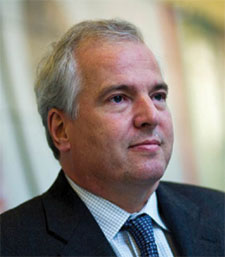 NIH Director Francis Collins today announced his selection of Chris A. Kaiser as the new director of NIGMS. Dr. Kaiser expects to begin his appointment here in the spring of 2012. We are delighted by this news, and we appreciate the efforts of the NIH search committee in identifying and vetting candidates for the position.
A leading cell biologist, Dr. Kaiser has been head of the Department of Biology at MIT since 2004. He joined the MIT faculty in 1991 and became a full professor in 2002.
Dr. Kaiser is not new to the NIGMS community—he has been an NIGMS grantee since 1992 and has served on several NIH review committees. His research uses yeast to study the basic mechanisms of protein folding and intracellular transport, particularly how secreted and other proteins form disulfide bonds. He started this work as a graduate student at MIT in David Botstein’s lab, then expanded on it during a postdoctoral fellowship with Randy Schekman at the University of California, Berkeley. He plans to continue his research at NIH.
In the NIH news release on his selection, Dr. Kaiser said, “In taking this position, I feel a compelling call to duty for national service and to be an advocate for the basic research enterprise.”
We welcome his leadership and vision, and we very much look forward to working with him.
NIH Director Francis Collins today announced his selection of Chris A. Kaiser as the new director of NIGMS. Dr. Kaiser expects to begin his appointment here in the spring of 2012. We are delighted by this news, and we appreciate the efforts of the NIH search committee in identifying and vetting candidates for the position.
A leading cell biologist, Dr. Kaiser has been head of the Department of Biology at MIT since 2004. He joined the MIT faculty in 1991 and became a full professor in 2002.
Dr. Kaiser is not new to the NIGMS community—he has been an NIGMS grantee since 1992 and has served on several NIH review committees. His research uses yeast to study the basic mechanisms of protein folding and intracellular transport, particularly how secreted and other proteins form disulfide bonds. He started this work as a graduate student at MIT in David Botstein’s lab, then expanded on it during a postdoctoral fellowship with Randy Schekman at the University of California, Berkeley. He plans to continue his research at NIH.
In the NIH news release on his selection, Dr. Kaiser said, “In taking this position, I feel a compelling call to duty for national service and to be an advocate for the basic research enterprise.”
We welcome his leadership and vision, and we very much look forward to working with him.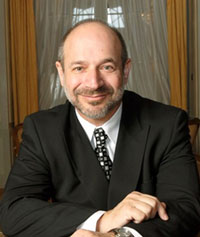 We are pleased that Bruce Beutler, who has been an NIGMS grantee since 2000, is a recipient of this year’s Nobel Prize in physiology or medicine. He was cited for “discoveries concerning the activation of innate immunity.” We congratulate him on this great honor.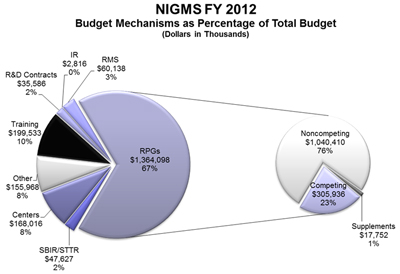
 As you know from a previous post, in April we issued Investing in the Future: NIGMS Strategic Plan for Biomedical and Behavioral Research Training. Since then, several NIGMS working groups have been very busy devising practical ways to implement the plan’s 15 action items. Last month, we brought together about 25 stakeholders—training grant directors, other university researchers, deans, department chairs and others—to give us a reality check on some of our proposals. We were gratified to see that we are on course to implement most of the measures the plan calls for by early 2012.