Abbey Bigler-Coyne

Abbey Bigler

Abbey is a science writer who enjoys making important biological science and public health information accessible to everyone.

Filter by posts type:

Reset

Zinc: Zapping Invaders

February 24, 2021

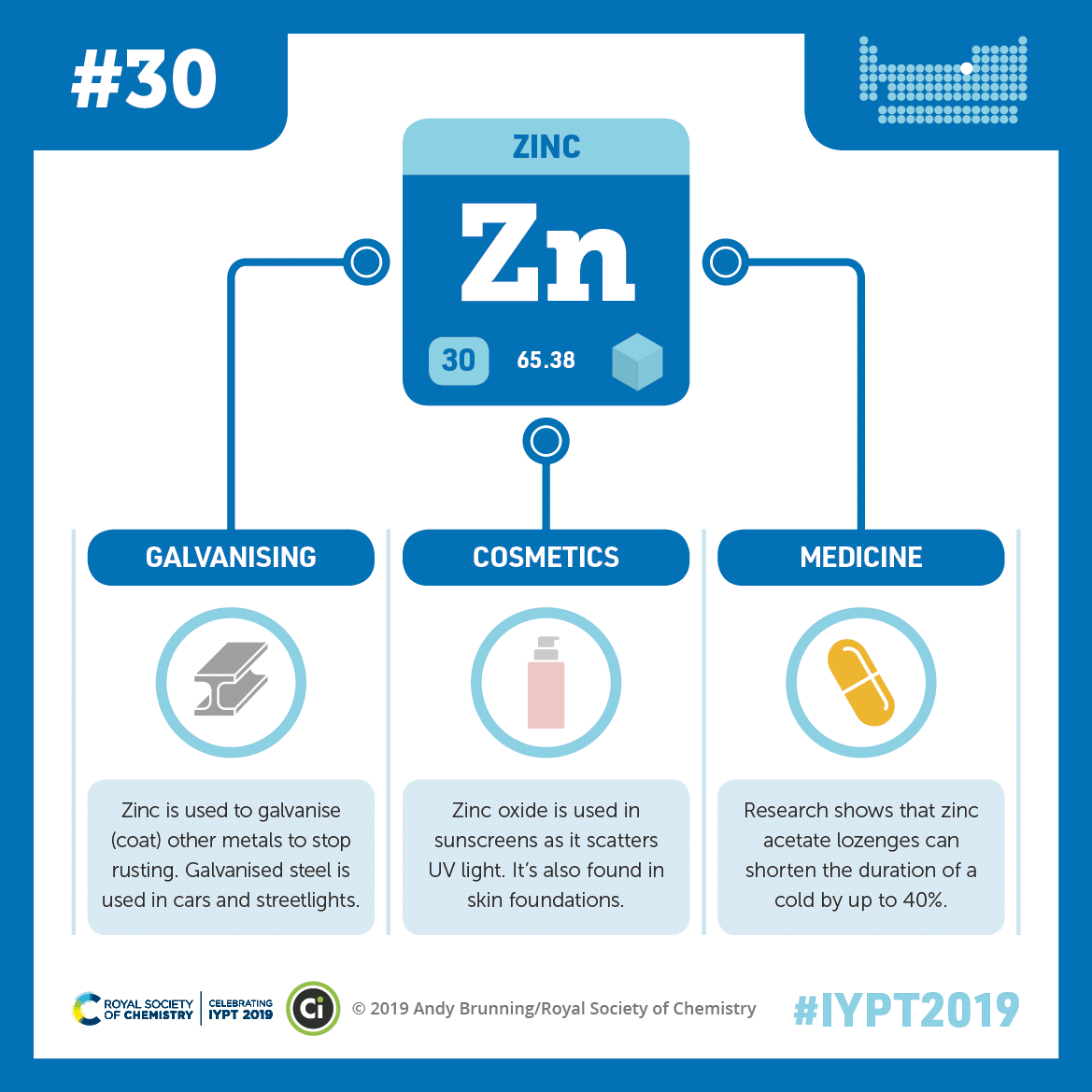
Although zinc may appear last on nutrition labels, it’s the second-most abundant trace element in our bodies, behind only iron. (Trace elements are molecules our bodies need in small amounts to stay healthy). Zinc is crucial for a well-functioning immune system, wound healing, physical growth, the senses of taste and smell, and the construction of proteins and DNA. It can also partner with oxygen to form zinc oxide, a compound that scatters ultraviolet light and can act as a protective barrier over inflamed skin. Many sunscreens, burn ointments, diaper creams, and other skin treatments contain zinc oxide.

A graphic showing zinc’s abbreviation, atomic number, and atomic weight connected by lines to illustrations of an I-beam, a cosmetics bottle, and a pill. Zinc may help shorten colds, and it’s part of a compound that can protect skin from ultraviolet light. The element is also used to coat other metals and prevent rusting. Credit: Compound Interest. CC BY-NC-ND 4.0.
Continue Reading

Through the Looking Glass: Microscopic Structures in Many Sizes

February 17, 2021

We seldom see microscopic objects next to one another, so it can be difficult to picture how they compare. For instance, it might surprise you that a thousand cold-virus particles could line up across one human skin cell! The largest objects that scientists view through microscopes are about a millimeter (roughly the size of a poppyseed), and they’re about 10 million times larger than the smallest molecules scientists can view: atoms.

Continue Reading

COVID-19 Vaccine and Therapeutic Trials ACTIV-ate in West Virginia

February 3, 2021
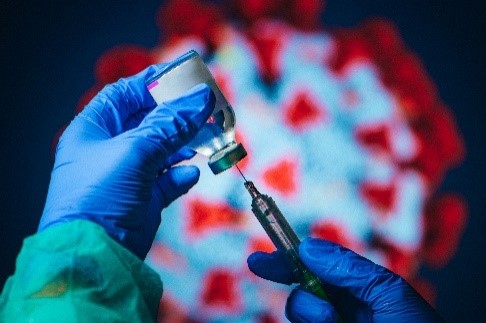
Hands in medical gloves drawing liquid from a vial into a syringe with a model of SARS-CoV-2 in the background. ACTIV clinical trials will evaluate the safety and efficacy of COVID-19 treatments and vaccines. Credit: iStock.

Since the virus that causes COVID-19, known as SARS-CoV-2, was first reported in late 2019, scientists have launched hundreds of studies on strategies for diagnosis, prevention, and treatment. To prioritize the most promising vaccine and therapeutics candidates, streamline clinical trials, and coordinate regulatory processes, the National Institutes of Health (NIH) and the Foundation for the NIH have established the Accelerating COVID-19 Therapeutic Interventions and Vaccines (ACTIV) partnership. ACTIV brings together eight government entities, 20 biopharmaceutical companies, and four nonprofit organizations.

The public-private partnership provides infrastructure, subject matter expertise, and funding to efficiently bring the most promising therapeutics and vaccines into clinical trials. Five ACTIV therapeutic trials are underway. NIGMS-supported Institutional Development Award Program Infrastructure for Clinical and Translational Research (IDeA-CTR) networks reach historically underserved areas and populations, which are important participants in such trials.

Continue Reading

Cool Images: Bewitching Bacteria

January 27, 2021

Some bacteria benefit us as part of our microbiome—the vast collection of microorganisms that live in and on our bodies—while others can make us sick. Whether helpful or dangerous, bacteria can appear colorful and striking under a microscope. These photos provide just a small peek into the incredible diversity of these microbes.

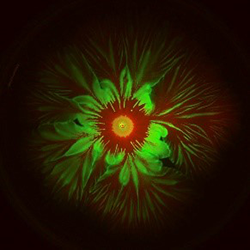
A green pattern resembling a flower on a red background. Credit: Liyang Xiong and Lev Tsimring, BioCircuits Institute, UCSD.

This floral pattern emerged when a researcher grew two strains of bacteria—Acinetobacter baylyi (red) and Escherichia coli (green)—together for 2 days in a petri dish. A. baylyi are found in soil and typically don’t pose a threat to humans, although some strains can cause infections. E. coli normally live in the intestines of people and animals. Most strains are harmless, but some can cause food poisoning or other illnesses.

Continue Reading